

















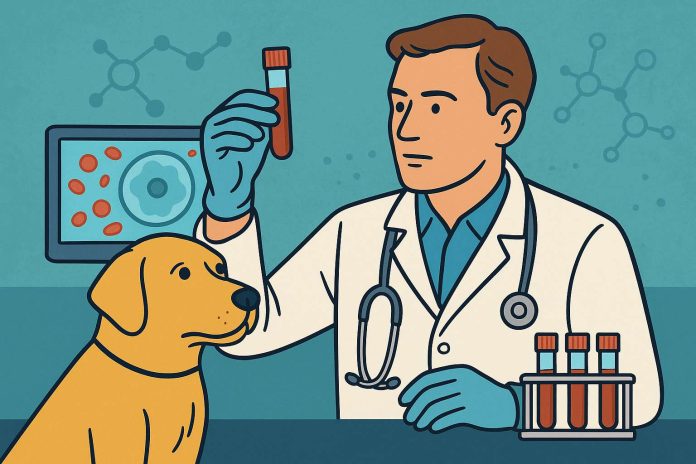
A team at the University of Guelph is working on a microRNA blood test that targets osteosarcoma, a fast-moving bone cancer. The idea is direct. Find clearer signals in blood, sort risk earlier, then guide treatment with more confidence.
Osteosarcoma stays hard to manage in both veterinary and human medicine. Doctors often treat people with surgery plus chemotherapy. In many reports, survival sits around 60 to 75 percent when the cancer has not spread at diagnosis. Then the outlook can change quickly once it spreads. Relapse can happen, and the next steps get tougher.
So researchers keep looking for better early warnings. They want tools that help at diagnosis, then keep helping after surgery.
Why current checks still leave gaps
Clinicians use scans, biopsies, and pathology reports. These tools matter, and they save lives. Still, they do not always catch early spread. Tiny clusters of cancer cells can hide beyond what imaging can see. Then a patient can look stable for a short time, and next the disease returns.
So a blood marker sounds appealing. A blood test can be repeated. It can track changes across months. It can fit into follow-up visits without a long procedure. It can also support clearer talks with families, since the result gives a measurable signal.
Why dogs sit at the center of this work
Pet dogs get osteosarcoma far more often than people. And their disease often behaves in similar ways. That makes dogs a strong natural model for research that aims to help both species.
There is another reason this matters. Dogs live in real homes, with real routines, real diets, and real stress. So the research reflects real life. That helps teams learn which markers hold up outside a lab setting.
Then the benefit becomes personal. Owners face tough choices about surgery, chemo, pain control, and day-to-day comfort. A clearer risk read can help them decide on a plan that fits their dog and their family.
What microRNAs add to the picture
MicroRNAs are tiny molecules that help control how cells behave. Cancer can shift microRNA patterns. Those shifts can show up in blood, so researchers can measure them without cutting into the tumor.
One marker that has drawn attention in this work is miR-214-3p. Higher levels have been linked with worse outcomes in canine osteosarcoma, including faster disease progression and shorter survival. Then teams look at panels too, not just one marker. A panel can sort patients into risk groups more clearly, and that helps in real care.
So the goal is not just “a number on a page.” The goal is a result that changes the next step.
A clinic-friendly test, not a lab-only project
Research results only help patients when clinics can use them. So the team’s focus includes the test format, the workflow, and the time needed from sample to answer.
One path involves lab-on-a-chip devices. These tools can run tests on a small sample, inside tiny channels and sensors. Then the process can become faster and simpler for clinics.
Now ask a practical question. What would a better blood test change first. It can change the follow-up plan, and it can change the treatment conversation.
A vet could set scan timing based on risk group. A doctor could use the result to guide monitoring and treatment intensity. And families could feel less stuck in the dark.
What this research could change for patients
This work aims at a few clear wins. So if the test proves reliable, it can support:
- Earlier risk sorting at diagnosis
- Better relapse prediction after surgery
- Follow-up schedules that match risk
- Treatment planning that fits the patient’s profile
- Clearer conversations with families
At the same time, this kind of research reminds people of a broader truth. Veterinary medicine can drive human progress, and human research can feed back into better animal care. The bridge works both ways.
If you like reading about real medical breakthroughs in animals, you may enjoy this story too: Thailand’s first cat pacemaker surgery that gave Pepsi a lifesaving new start.